When it comes to online conversations, people often use short slang terms to express strong emotions. One common example is JFC. You may see it in text messages, social media comments, memes, or online discussions. If someone sends you this abbreviation, you might wonder what it means and how to respond. Understanding JFC Meaning in Text can help you follow conversations and recognize the feelings behind the message. This guide explains its definition, origin, common uses, tone, and examples. You will also learn when to use it, when to avoid it, and how it differs from similar texting abbreviations.
What Does JFC Meaning in Text?
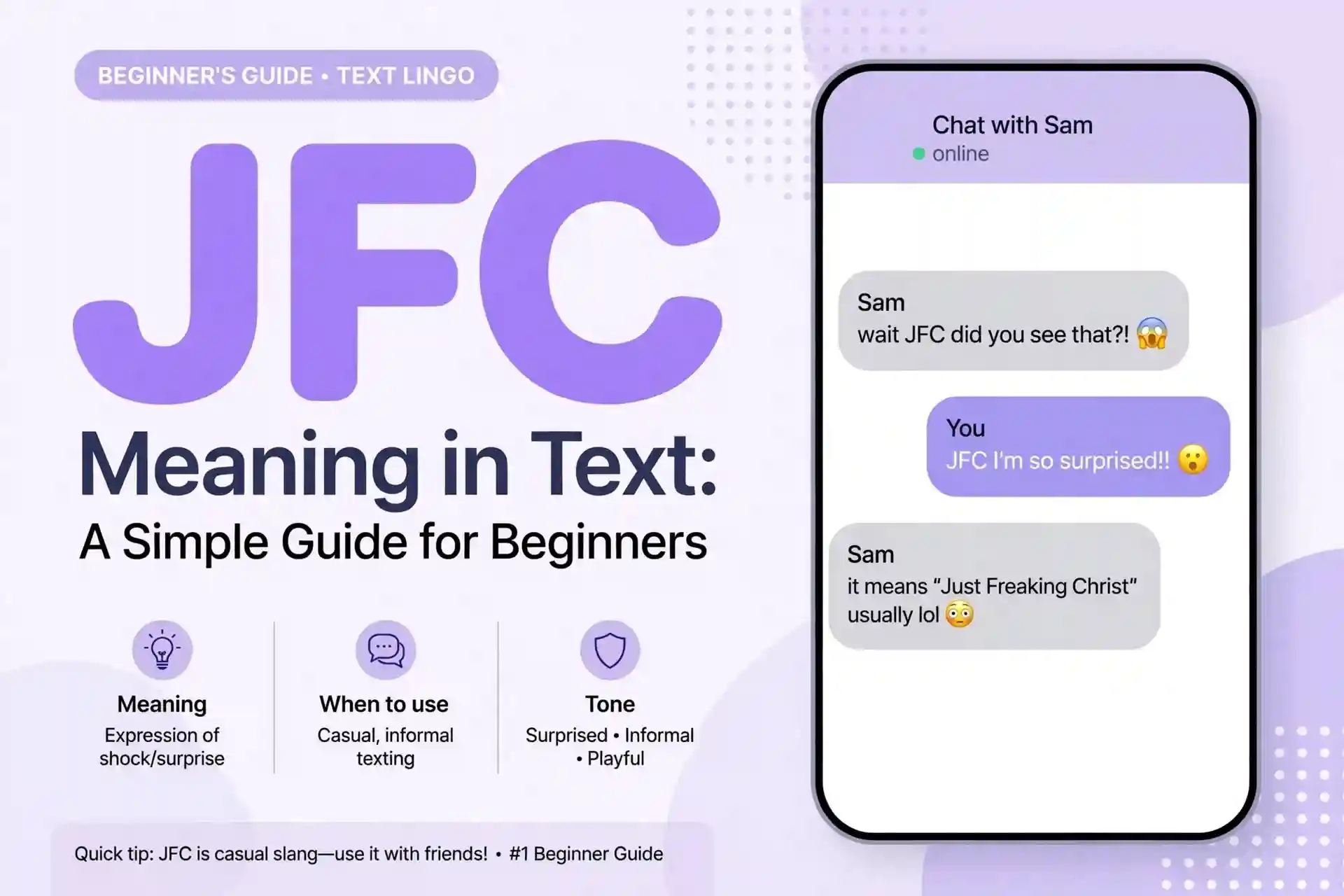
JFC stands for Jesus Fing Christ*. It is a slang expression people use to show strong emotions. These feelings often include shock, frustration, anger, disbelief, or surprise.
People use this abbreviation when something feels unbelievable, annoying, or overwhelming. It adds extra emotion to a message without requiring a long explanation.
For example:
- “JFC, that exam was difficult!”
- “JFC, why is traffic so bad today?”
- “You paid that much for a phone? JFC!”
The meaning depends on the conversation. Someone might use it after hearing surprising news. Another person might type it when they feel annoyed.
JFC contains profanity because of the word in its full form. Some people consider it offensive because it uses a religious name in an exclamation.
It is important to understand the situation before using it. Friends may use it casually, but it may not suit formal conversations.
What Does JFC meaning in Texting and Social Media?
JFC has the same basic meaning across most messaging apps and social platforms. It helps users express strong reactions in a short and direct way.
You can find this abbreviation in:
- Text messages: Friends use it to react to surprising or frustrating situations.
- Snapchat: Users add it to private chats and story replies.
- Instagram: People write it in comments and direct messages.
- TikTok: Viewers use it to react to funny, shocking, or unbelievable videos.
- Facebook: Users add it to comments and casual discussions.
- Reddit: Members use it when reacting to unexpected stories or opinions.
- Discord: Gamers and online communities use it during fast conversations.
The expression does not have a different definition on each platform. The main difference comes from the topic and the people involved.
For example, someone might comment “JFC!” under a video showing an unexpected accident. Another person might send the same abbreviation after receiving a shocking bill.
Both messages express a strong reaction.
Is JFC meaning a Positive or Negative Expression?
JFC usually carries a negative or intense tone. However, it does not always express anger.
People use it to show different feelings, such as:
- Shock: Something unexpected has happened.
- Frustration: A situation has become annoying.
- Disbelief: Someone finds something hard to believe.
- Excitement: An event feels incredibly surprising.
- Disappointment: Something did not go as expected.
- Amusement: A funny situation creates a strong reaction.
For example, “JFC, that was amazing!” shows excitement. “JFC, I cannot believe you did that!” may show anger or disbelief.
The words around the abbreviation help explain the intended emotion.
How Is JFC meaning Used in Everyday Conversations?
People use this abbreviation in casual conversations when they want to react quickly. It often appears at the beginning or end of a sentence.
The tone changes with the situation. A message can sound playful, annoyed, surprised, or serious.
1. To Express Surprise
People often type JFC when something happens unexpectedly. It helps show that they feel shocked.
Examples:
- “JFC, I didn’t expect that!”
- “JFC, you actually won?”
- “JFC, that was a huge surprise!”
- “JFC, how did that happen?”
In these examples, the sender expresses disbelief. They may not feel angry. They simply cannot believe what they have seen or heard.
2. To Show Frustration
JFC can also express irritation when something goes wrong. People use it when they feel tired of a problem.
Examples:
- “JFC, my internet stopped working again.”
- “JFC, this homework is taking forever.”
- “JFC, why does everything break today?”
- “JFC, I missed the bus again.”
This use often suggests that the sender feels annoyed. It can make the message sound stronger than ordinary words like “ugh” or “oh no.”
3. JFC meaning To Express Disbelief
Sometimes, people use JFC when they hear something difficult to believe.
Examples:
- “JFC, is that really true?”
- “JFC, he said that in front of everyone?”
- “JFC, you spent all your savings?”
- “JFC, I cannot believe this happened.”
The abbreviation adds emphasis. It tells the reader that the information has created a strong reaction.
4. To React to Something Funny
People also use JFC when something is extremely funny or ridiculous.
Examples:
- “JFC, that video made me laugh so hard.”
- “JFC, your cat is so dramatic.”
- “JFC, I was not ready for that joke.”
- “JFC, this meme is too funny.”
Here, the expression adds humor and exaggeration. The sender may not feel angry at all.
5. To Show Excitement
Although JFC often expresses frustration, it can also show excitement.
Examples:
- “JFC, that concert was incredible!”
- “JFC, we finally got the tickets!”
- “JFC, your new car looks amazing.”
- “JFC, that performance was unbelievable!”
The surrounding words make the positive meaning clear.
JFC Meaning in Text Messages: Real-Life Examples
The best way to understand internet slang is to see how people use it in everyday messages. These examples show different situations and possible meanings.
Example 1: Talking About School
Person A: I have three exams tomorrow.
Person B: JFC, that’s a lot to study for!
Here, JFC shows sympathy and surprise. Person B thinks the workload sounds stressful.
Example 2: Talking About Money
Person A: My phone repair cost $300.
Person B: JFC, that’s expensive!
The abbreviation expresses disbelief about the high price.
Example 3: Sharing Unexpected News
Person A: I just found out that we are moving next month.
B: JFC, I wasn’t expecting that.
Person B uses the expression to show shock.
How to Reply When Someone Says JFC
Your response should match the sender’s mood and the topic. You do not need to repeat the abbreviation in your reply.
A simple response often works best. You can ask a question, share your opinion, or acknowledge the situation.
1. When Someone Is Surprised
If someone uses JFC after hearing unexpected news, give them more information or explain what happened.
Possible replies:
- “I know, right?”
- “I was shocked too!”
- “Yeah, nobody expected that.”
- “It’s hard to believe.”
- “I couldn’t believe it either.”
2. When Someone Is Frustrated
If the sender sounds annoyed, show understanding. Avoid making jokes if the situation seems serious.
Possible replies:
- “I know how frustrating that is.”
- “That’s really annoying.”
- “Hopefully, it gets better.”
- “I hope you can fix it soon.”
- “Tell me what happened.”
3. When Someone Is Excited
If the sender uses JFC to express excitement, respond with the same positive energy.
Possible replies:
- “Right? It was amazing!”
- “I’m so excited too!”
- “That was incredible!”
- “I knew you’d love it!”
- “We need to celebrate!”
4. When Someone Is Joking
If the conversation is playful, you can use a funny or lighthearted response.
Possible replies:
- “Haha, I knew you’d react like that.”
- “You weren’t ready!”
- “That was too funny.”
- “I can’t stop laughing either.”
- “Wait until you see the next one.”
5. When You Do Not Understand the Message
If you are unsure what the sender means, ask for clarification.
You can reply:
- “What happened?”
- “Why are you surprised?”
- “Is everything okay?”
- “What do you mean?”
- “Did something go wrong?”
A thoughtful reply helps keep the conversation natural.
Is JFC Rude or Offensive?
JFC can sound rude or offensive because its full form includes profanity and a religious reference. Some people use it casually, while others dislike it.
Your relationship with the other person matters. A close friend may not mind the expression. A teacher, manager, family member, or professional contact may find it inappropriate.
Consider these points before using it:
- Religious beliefs: Some people consider the expression disrespectful toward their faith.
- Professional settings: It can make workplace messages sound unprofessional.
- Personal boundaries: Not everyone feels comfortable with profanity.
- Public comments: A strong expression may offend people who do not know you.
- Serious situations: It may sound insensitive when someone shares upsetting news.
You should also consider your audience. A private message between close friends has a different tone from a public comment.
When Should You Avoid Using JFC?
There are situations where another expression works better.
Avoid using it when:
- You are messaging your boss or teacher.
- You are writing a professional email.
- You are speaking with someone who dislikes profanity.
- You are discussing a sensitive religious topic.
- You are responding to someone who is grieving.
- You are communicating with someone you do not know well.
You can choose a softer alternative to express the same feeling.
For example:
- “Oh my goodness!”
- “Seriously?”
- “I can’t believe it!”
- “That’s unbelievable!”
- “Good grief!”
- “What a surprise!”
These expressions communicate emotion without using strong language.
Common Mistakes People Make When Using JFC meaning
Understanding an abbreviation is only part of learning internet slang. You should also know how to use it correctly.
Some people misunderstand its tone or use it in situations where it does not fit.
1. Thinking It Always Shows Anger
JFC does not always mean someone is angry. It can express excitement, surprise, or amusement.
Read the complete message before deciding how the sender feels.
2. Using It in Formal Messages
JFC contains strong language. It may create a negative impression in professional communication.
Choose a polite expression when writing to colleagues, customers, teachers, or managers.
3. Assuming Everyone Understands It
Not everyone knows internet abbreviations. Older people or people unfamiliar with online slang may not understand the expression.
Use the complete phrase or a simpler alternative when clarity matters.
4. Ignoring the Religious Context
Some people may find the expression disrespectful. Think about the reader’s beliefs and personal preferences before using it.
5. Misreading the Sender’s Tone
A short message can be difficult to interpret. JFC might express playful surprise or genuine frustration.
Do not assume the sender is angry without considering the rest of the conversation.
6. Using It Too Often
Repeating the same abbreviation in every message can make your communication feel exaggerated.
Use it when you genuinely want to emphasize a strong reaction.
Tips for Using JFC Naturally in Online Chats
You can use JFC more effectively by paying attention to tone, timing, and audience.
Here are some simple tips:
- Understand the situation: Use it when something genuinely surprises, frustrates, or amuses you.
- Know your audience: Make sure the other person feels comfortable with profanity.
- Keep it casual: Use it in friendly conversations rather than formal messages.
- Read the context: Check whether the conversation is serious or playful.
- Avoid unnecessary repetition: One use can communicate a strong reaction.
- Consider alternatives: Choose softer words when you want to sound polite.
- Use punctuation carefully: An exclamation mark can make the reaction sound more intense.
For example, “JFC!” sounds like a sudden reaction. “JFC, that was unexpected” gives the reader more context.
You can also write the abbreviation in lowercase as “jfc.” Both forms communicate the same expression. Capital letters simply make it stand out.
Frequently Asked Questions About JFC Meaning in Text
1. What Does JFC Meaning in Text?
JFC stands for “Jesus F***ing Christ.” People use it to express strong emotions, such as surprise, frustration, shock, or disbelief. It is an informal abbreviation that commonly appears in text messages and social media conversations.
2. Is JFC a Bad Word?
Yes, JFC contains profanity. Some people consider it offensive or disrespectful because it includes a religious reference. It is best to avoid it in professional settings and conversations with people who dislike strong language.
3. What Does JFC Meaning on Snapchat?
On Snapchat, JFC has the same meaning as in regular texting. Users type it in private messages, story replies, and casual conversations to show surprise, frustration, or disbelief.
4. Can JFC Be Used in a Positive Way?
Yes. Although people often use it to express frustration, they can also use it to show excitement or amusement. For example, “JFC, that performance was amazing!” expresses a positive reaction.
5. What Is a Polite Alternative to JFC?
You can use expressions such as “Oh my goodness,” “Seriously,” “Good grief,” or “I can’t believe it.” These alternatives express surprise or frustration without using profanity.
6. Should I Use JFC in Professional Conversations?
No. JFC is informal and contains strong language. It may sound inappropriate in workplace emails, business messages, and professional discussions. Use polite expressions to communicate clearly and respectfully.
Final Thoughts
Internet slang changes how people communicate. Short expressions help users share emotions quickly, especially in text messages and social media conversations. Understanding JFC Meaning in Text makes it easier to recognize surprise, frustration, disbelief, and excitement in everyday chats.Remember that JFC stands for “Jesus F***ing Christ.”
It is an informal expression that contains profanity. Its tone depends on the situation, the message, and the relationship between the people talking. Someone may use it to react to shocking news, a frustrating problem, or a funny video.The most important thing is to understand the context before replying. Once you recognize the tone, you can respond naturally and avoid misunderstandings.