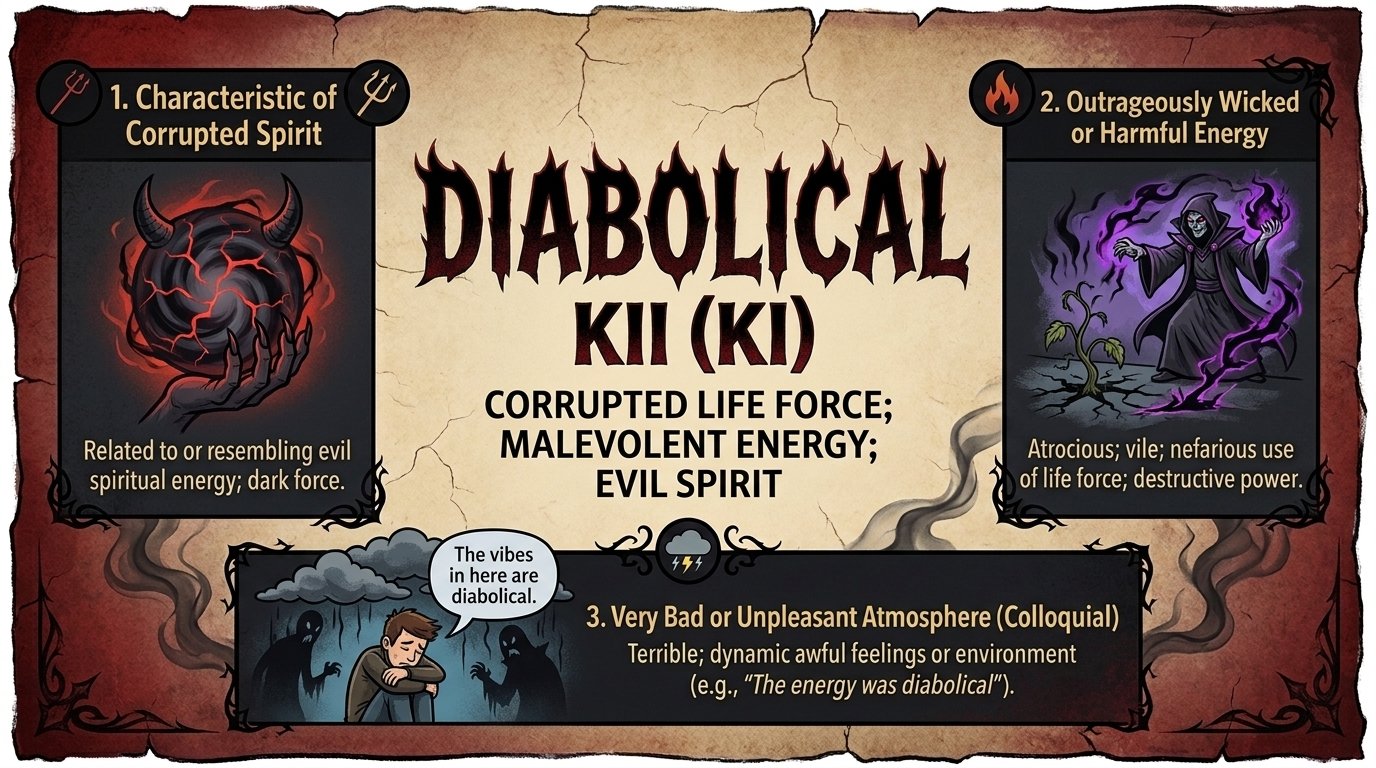
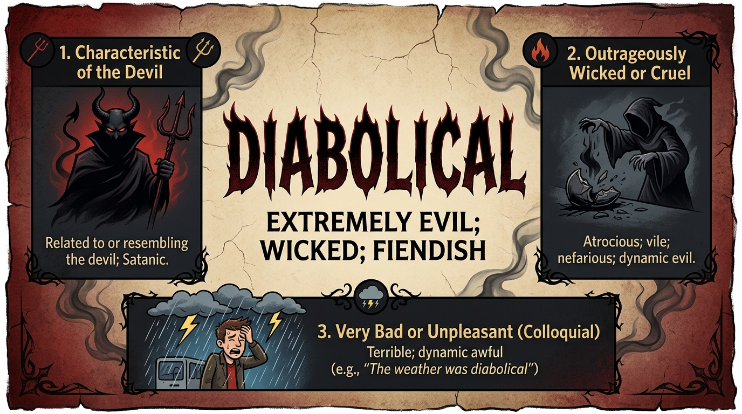
The word diabolical describes something extremely evil, cruel, or wicked.
It can refer to a person, action, plan, or idea with harmful intent.
The term has a strong tone and often suggests serious wrongdoing.
Writers use it to make dark or disturbing behavior sound more intense.
In casual speech, it can also describe something extremely difficult or clever.
The exact sense depends on the situation and the words around it.
What Does Diabolical Mean?
Diabolical means extremely wicked or evil. It describes behavior that goes far beyond ordinary bad conduct. The word can suggest cruelty, dishonesty, or a desire to cause harm. It is much stronger than simply saying something is bad.
The term is often used when a situation feels shocking or disturbing. A person may have diabolical intentions without acting on them. An idea can also receive this label when its purpose is harmful.
The word has a serious tone in most formal writing. It can make a description sound darker and more forceful. Context helps readers understand how strongly the term is being used.
Diabolical Meaning
The main diabolical meaning relates to extreme wickedness. Its historical connection with the devil gives it a dark association. Over time, English speakers began using it more broadly for cruel or evil behavior.
The adjective can describe more than people. It may modify a scheme, plot, act, decision, or motive. This makes it useful when a writer wants to highlight harmful intent.
For example, a cruel decision could be called diabolical if it deliberately causes suffering. The word adds emotional weight to the description. It tells the reader that the action is viewed as especially terrible.
Meaning of Diabolical
The meaning of diabolical is closely linked with words such as evil, wicked, fiendish, and malicious. These terms overlap, but each one has a slightly different focus. Diabolical usually carries a particularly dark and dramatic feeling.
A malicious person wants to cause harm. A sinister situation creates a sense of danger. A diabolical action can suggest both harmful intent and extreme cruelty.
The word can also describe something designed with great cunning. This sense appears more often in stories and informal conversations. The speaker may focus on the cleverness of the plan rather than literal evil.
Diabolical Meaning in English
Diabolical is an adjective in English. It describes a noun and can appear before that noun in a sentence. Common combinations include diabolical scheme, diabolical plot, and diabolical act.
The word can also appear after linking verbs. For example, a sentence may say that an action “was diabolical.” This structure directly describes the nature of the action.
English speakers usually reserve the term for strong situations. It may sound unnatural when used for something small or harmless. Choosing a less intense adjective can make everyday writing sound more natural.
Diabolical Meaning in a Sentence
Seeing the word in different contexts makes its use easier to understand.
- The novel centers on a diabolical mastermind.
- The scheme caused widespread suffering.
- His motive was considered deeply diabolical.
- The film reveals a sinister secret.
- The judge condemned the cruel act.
- That puzzle has a diabolical difficulty level.
- The character uses deception to reach his goal.
- Their strategy was clever but highly destructive.
Each sentence gives the word a different setting. Some examples use a serious sense, while others show its informal use. This difference comes from the surrounding context.
Diabolical Synonyms
Several words can express a similar idea. However, they should not be treated as exact replacements in every sentence.
| Synonym | Meaning |
| Evil | Morally wrong or harmful |
| Wicked | Bad or immoral |
| Cruel | Causing pain or suffering |
| Sinister | Suggesting danger or evil |
| Malicious | Intended to cause harm |
| Fiendish | Extremely cruel |
| Nefarious | Wicked or criminal |
| Vile | Extremely unpleasant or immoral |
| Devious | Dishonest or tricky |
| Atrocious | Shockingly bad or cruel |
The best choice depends on the message. Malicious focuses on intent, while sinister often creates a sense of danger. Fiendish and nefarious can sound more literary or dramatic.
Diabolical Antonyms
Words with opposite meanings can help clarify the term. These alternatives describe positive character, helpful actions, or good intentions.
- Kind
- Good
- Gentle
- Caring
- Honest
- Merciful
- Generous
- Benevolent
- Compassionate
- Helpful
For instance, a compassionate decision aims to support someone. A diabolical decision would suggest the opposite purpose. The contrast becomes clear through the intention behind each action.
Is Diabolical Always Negative?
Usually, yes. The standard use of diabolical carries a negative meaning. It is normally connected with cruelty, evil, or harmful behavior.
There is one important exception in casual speech. People may use the word as exaggeration when something is extremely hard or frustrating. A difficult puzzle might receive this description even when no real harm is involved.
This informal use changes the emotional effect. The speaker may be joking rather than making a serious moral judgment. The subject of the sentence usually makes that clear.
Diabolical Meaning in Slang
In modern casual speech, diabolical can describe something extreme. It may refer to a difficult challenge, clever trick, harsh situation, or outrageous idea. The usage is often playful.
A gamer might call a very challenging level diabolical. Someone discussing a complicated prank could use the same word for dramatic effect. Neither statement necessarily refers to genuine evil.

This style is more common in conversations than formal documents. It gives the speaker a stronger way to express frustration or surprise. The intended meaning comes from the setting.
How to Use Diabolical Correctly
Use diabolical when you need a strong adjective for an extreme situation. It works naturally with nouns related to plans, actions, characters, motives, and schemes. It can also describe difficult challenges in informal settings.
Consider the tone before choosing it. A serious topic may require the traditional sense. A casual conversation can allow the exaggerated meaning.
Avoid using the word simply because it sounds dramatic. If a situation is only mildly unpleasant, another adjective will usually be more suitable. Strong vocabulary works best when the context supports it.
Common Mistakes With Diabolical
A common mistake is using diabolical as though it means ordinary bad. The word has much greater intensity. Using it for every negative situation can make writing sound unnatural.
Another mistake is assuming that it only describes people. It can modify many nouns, including plans, actions, motives, and schemes. Its role depends on the sentence.
Some writers also use it without checking the tone. A formal article and a casual social post may use the word differently. Matching the adjective to the audience creates clearer writing.
Diabolical vs Evil
Evil is a broad word for serious moral wrongdoing. Diabolical is more specific in tone because it suggests an extreme form of wickedness. Both can describe harmful behavior.
| Feature | Evil | Diabolical |
| Basic idea | Morally wrong | Extremely wicked |
| Tone | Strong | More dramatic |
| Use | Very broad | More specific |
| Focus | Wrongdoing | Extreme cruelty or intent |
A person can be described as evil without having a complicated plan. Calling that person diabolical may suggest greater cunning or cruelty. The second word therefore creates a stronger impression.
Diabolical vs Wicked
Wicked and diabolical are close in meaning, but they do not always sound the same. Wicked is common in everyday English and can describe many forms of bad behavior. Diabolical tends to sound more intense.
Wicked can also have an informal positive sense. In some slang, it means excellent or impressive. Diabolical rarely carries that meaning.
For formal descriptions of extreme wrongdoing, diabolical can create a stronger effect. For ordinary conversation, wicked may sound more natural. The choice depends on the level of intensity you want.
Real-Life Examples of Diabolical
The word may appear in descriptions of serious crimes or harmful decisions. Journalists and commentators sometimes choose it when an event seems especially cruel. Its use signals strong disapproval.
It can also describe deceptive business tactics or dishonest schemes. In this setting, the emphasis may fall on planning and intent. The term shows that the behavior was viewed as unusually harmful.
Outside serious topics, the word appears in entertainment and everyday conversation. A brutally difficult competition or frustrating task may be labeled diabolical. This lighter use is usually based on exaggeration.
When Should You Use Diabolical?
Choose diabolical when ordinary words do not fully express the severity of a situation. It is useful for extreme cruelty, harmful schemes, and disturbing motives. It can also fit informal descriptions of unusually difficult challenges.
Think about your audience before using it. Formal readers may understand the traditional meaning first. Friends or online audiences may interpret it as playful exaggeration.
A simple test can help. If “evil,” “cruel,” or “extremely difficult” fits the situation, diabolical may work when you want stronger wording. If the subject is mild, a simpler adjective is usually better.
Frequently Asked Questions About Diabolical Meaning
What does diabolical mean?
Diabolical means extremely evil, wicked, or cruel. It can describe a person, action, plan, motive, or idea. In informal speech, it may also describe something extremely difficult.
Is diabolical a bad word?
It is not a swear word. However, it normally expresses a very negative judgment. The traditional sense is associated with evil or extreme cruelty.
What is another word for diabolical?
Common alternatives include evil, wicked, sinister, malicious, fiendish, and nefarious. The correct option depends on the sentence and intended tone.
Can diabolical describe a plan?
Yes. The word can describe a plan that has harmful or cruel intentions. It is especially common in fictional stories and dramatic descriptions.
What does diabolical mean in slang?
In casual speech, it can mean extremely difficult, frustrating, clever, or outrageous. This usage is often exaggerated and does not always suggest actual evil.
Is diabolical the same as evil?
They are related but not identical. Evil is broader, while diabolical usually suggests a more extreme or dramatic form of wickedness.
Conclusion
The diabolical meaning centers on extreme wickedness, cruelty, or harmful intent. It can describe people, actions, plans, motives, and fictional characters. Casual speakers may also use it for unusually difficult or extreme situations. Understanding the context makes the word much easier to use correctly.