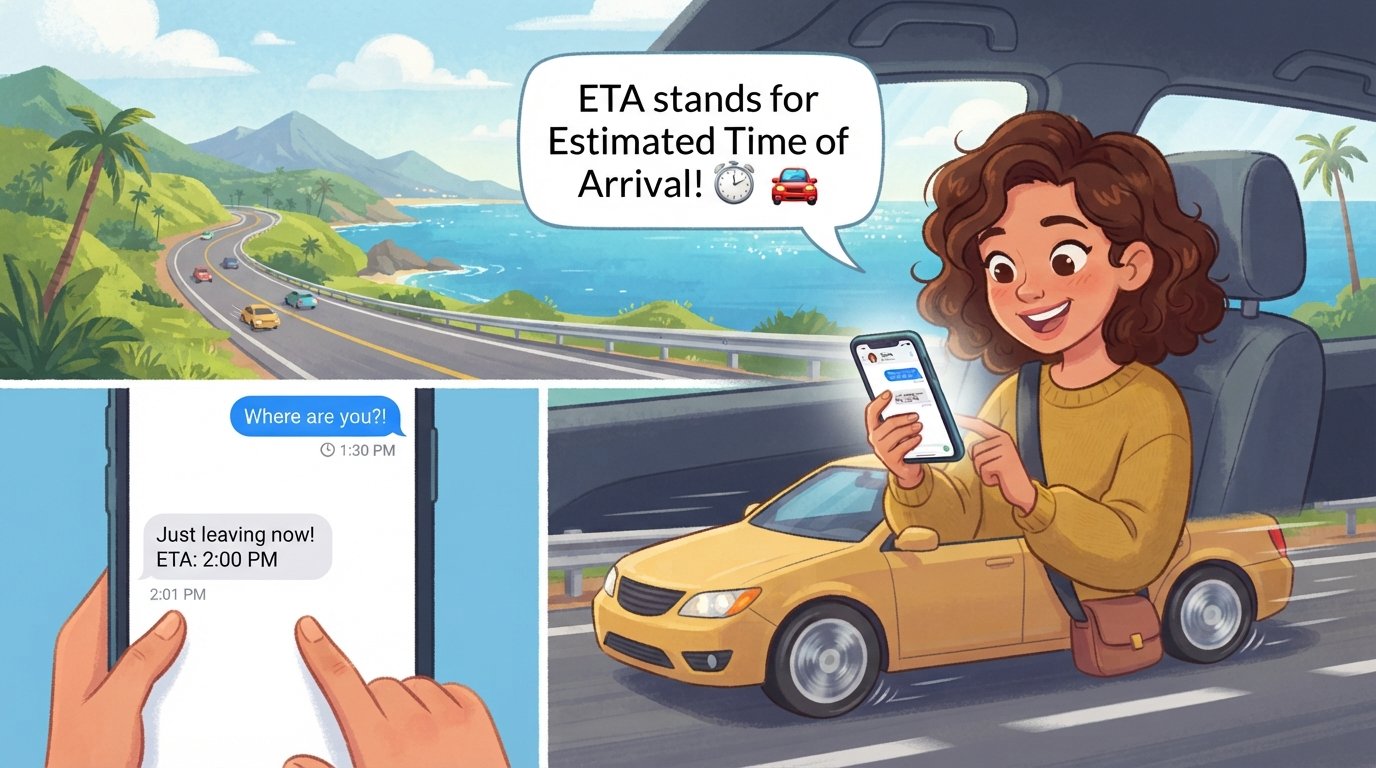
ETA is one of the most common abbreviations used in daily communication. The eta meaning usually refers to the expected time when a person or thing will arrive. You may see ETA in text messages, delivery updates, travel apps, work chats, and business emails. It is a short way to talk about arrival without writing a long sentence. For example, someone may text, “What is your ETA?” when they want to know when you will arrive. The term is simple, but its use can change slightly depending on the situation. Learning the meaning of ETA can make texts, messages, and work conversations much easier to understand.
What Does ETA Mean
The most common eta meaning is Estimated Time of Arrival. It tells you the expected time when someone or something will reach a certain place. A person can have an ETA, but so can a car, bus, train, flight, package, food order, or delivery driver.
For example, your friend may text, “My ETA is 7 PM.” This means your friend expects to arrive around 7 PM. It does not mean that 7 PM is guaranteed. The actual arrival can be earlier or later because of traffic, weather, delays, or other unexpected problems.
ETA is useful because it gives people a quick idea about timing. Instead of explaining a full travel plan, you can simply share your ETA. This makes communication faster and clearer, especially when people are waiting for someone or something to arrive.
The word “estimated” is important here. An estimate is based on the information available at that moment. If the situation changes, the ETA can change too. For example, a driver may have an ETA of 20 minutes at first, but heavy traffic may increase it to 35 minutes.
Simple Examples of ETA
- “What is your ETA?”
- “My ETA is 15 minutes.”
- “The driver gave an ETA of 6 PM.”
- “Our ETA is around noon.”
- “The package ETA is Friday.”
- “I will send my ETA soon.”
- “Traffic changed my ETA.”
- “The train ETA is 8:15 AM.”
- “Our ETA is almost one hour.”
- “The delivery ETA has changed.”
These examples show how flexible the term can be. The basic idea stays the same because ETA gives an expected arrival time.
Why People Use ETA
People use ETA because it is short and convenient. It works well in situations where timing matters. A friend waiting outside can ask for your ETA before meeting you. A customer can ask about the ETA of an order. A manager can ask for the ETA of a report.
ETA is also useful when plans are changing. If someone is running late, they can provide a new estimated arrival time. This helps other people adjust their plans without needing a long explanation.
The term is common in both casual and professional communication. It is easy to recognize once you know what it means. That is why ETA appears so often in texts, apps, emails, and online messages.
What Does ETA Stand For
So, what does ETA stand for? ETA stands for Estimated Time of Arrival. Each word explains an important part of the abbreviation. “Estimated” means the time is predicted, “time” refers to the expected hour or period, and “arrival” refers to reaching a destination.
The abbreviation is made from the first letters of the phrase. E comes from Estimated, T comes from Time, and A comes from Arrival. This makes ETA easy to remember and quick to type.
The term has been widely used in transportation and logistics. Today, it is much more common because of smartphones, GPS apps, online shopping, and instant messaging. People can now receive estimated arrival information almost instantly.
For example, a navigation app may show an ETA while you are driving. A food delivery app may show an ETA for your order. A shipping company may provide an estimated delivery date. In each case, the purpose is to tell you when something is expected to arrive.
ETA Does Not Mean Guaranteed Arrival
One important point about ETA is that it is not a guarantee. The estimated time can change when new conditions appear. This is especially common during travel and delivery.
Traffic is one of the easiest examples. A navigation app may first show an ETA of 5:30 PM. If an accident causes a traffic jam, the app may update the ETA to 6 PM.
Weather can also affect an estimated arrival. A flight, truck, train, or delivery may take longer than expected. Because of this, people should treat ETA as a helpful estimate rather than an exact promise.
ETA in Professional Communication
ETA is very common in workplaces. Employees may use it when discussing reports, presentations, files, meetings, projects, and other tasks. A manager may ask, “What is the ETA for the report?” This usually means they want to know when the report is expected to be ready.
In some workplaces, ETA is used even when something is not physically arriving. The idea is still similar because the person wants to know the expected completion time.
For example, a designer may tell a client, “The ETA for the first draft is Thursday.” This means the first draft is expected to be ready on Thursday.
What Does ETA Mean in Text
What does ETA mean in text? In a text message, ETA usually means Estimated Time of Arrival. It is commonly used when someone wants to know when another person will arrive.
A simple message like “ETA?” is a quick way to ask, “When do you expect to arrive?” It is often used between friends, family members, coworkers, and people who are meeting somewhere.
For example, imagine that you are waiting for a friend at a restaurant. Your friend is driving through traffic. You may send, “What’s your ETA?” Your friend can reply, “About 20 minutes.”
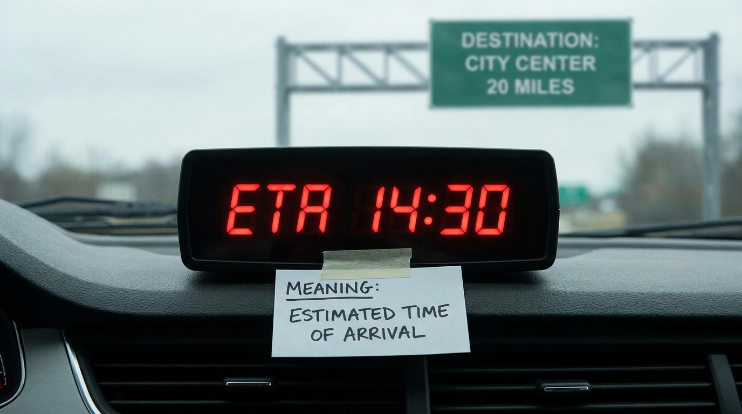
The phrase is useful because it saves time. Instead of typing a complete question, people can use three letters. This is especially helpful when someone is busy, traveling, or sending a quick update.
ETA in Casual Texts
In casual conversations, ETA often has a friendly and simple tone. It does not usually sound formal. Friends may use it before meeting for lunch, shopping, dinner, a movie, or another activity.
You may see messages such as “ETA?” or “What’s your ETA?” These messages usually mean the sender wants to know when you will arrive.
A person can also give an ETA without being asked. For example, they may write, “Leaving now. ETA 25 minutes.” This gives the other person useful information without requiring another message.
The meaning is normally easy to understand from the context. If people are already discussing travel or meeting plans, ETA almost always refers to an expected arrival time.
ETA in Texting About Deliveries
Text messages about deliveries can also include ETA. A customer may ask a driver or delivery service about the expected arrival of an order.
For example, a customer may write, “What is the ETA for my order?” The person wants to know when the order is expected to reach them.
A delivery driver may reply, “Your ETA is about 15 minutes.” This gives the customer a general idea of when the order should arrive.
The same idea applies to packages, groceries, food, documents, and other items. The exact wording may change, but the basic meaning remains the same.
ETA Text Message Examples
Friend: “What’s your ETA?”
Reply: “Around 7:30 PM.”
Coworker: “ETA for the report?”
Reply: “I should finish it by 3 PM.”
Customer: “What’s the ETA for my package?”
Reply: “It should arrive tomorrow.”
Family member: “ETA home?”
Reply: “Around 8 PM.”
Friend: “Send me your ETA when you leave.”
Reply: “Sure, I’ll send it once I’m on the road.”
These examples show that ETA can fit naturally into many types of text conversations.
ETA Meaning in Text
The eta meaning in text is usually simple and direct. It tells someone when a person, item, vehicle, or service is expected to arrive. The abbreviation is popular because it keeps messages short.
For example, someone may write, “ETA 10 mins.” This means the person expects to arrive in about 10 minutes. Another person may write, “New ETA 6:45 PM,” which means the expected arrival time has changed.
The meaning can depend on the topic of the conversation. If people are talking about a trip, ETA refers to arrival at a destination. If they are discussing a package, it refers to delivery.
This makes context important. The abbreviation itself stays the same, but the thing that is expected to arrive can be different.
Common ETA Phrases in Text
- “What’s your ETA?”
- “Any ETA?”
- “ETA please.”
- “My ETA is 20 minutes.”
- “I’ll update my ETA.”
- “The ETA changed.”
- “What is the new ETA?”
- “Can you send the ETA?”
- “The current ETA is 5 PM.”
- “I’ll arrive before the ETA.”
These phrases are short and easy to use. They are especially common in fast conversations where people need quick information.
ETA for Travel Plans
Travel is one of the most common uses of ETA. Drivers often share their ETA when they are traveling to meet someone. Navigation apps also calculate ETA based on distance, traffic, road conditions, and other information.
For example, your map may show an ETA of 4:40 PM. This means the app expects you to reach your destination around that time.
Public transportation can also use estimated arrival information. Buses and trains may show an expected arrival time on digital screens or mobile apps. These estimates can change if there is a delay.
Flights also have estimated arrival information. Passengers may see an expected arrival time during a journey. Again, this is an estimate rather than a guarantee.
ETA for Packages and Orders
Online shopping has made ETA even more common. When you order something online, you may see an estimated delivery date or time. This tells you when the package is expected to arrive.
Food delivery apps use similar information. You may see a message saying that your order will arrive in 25 minutes. That time works like an ETA because it gives you an expected arrival period.
Customers often use ETA when contacting support. They may ask when an order is expected to arrive. A support agent can then provide the latest estimated time.
The eta meaning stays connected to arrival even when the item is a package rather than a person.
ETA for Work Tasks
In workplace communication, ETA can refer to more than physical arrival. It can describe when a task, file, report, or project is expected to be ready.
For example, a team leader may write, “What’s the ETA on the presentation?” The team member may respond, “My ETA is tomorrow morning.”
This use is common because teams need to track progress. Knowing an expected completion time helps people organize meetings, deadlines, and other tasks.
Still, the word “estimated” matters. A work ETA can change if the task becomes more difficult or new requirements are added.
ETA vs. Exact Time
ETA should not be confused with an exact time. An ETA is a prediction based on current information. It can change when conditions change.
For example, your GPS may show an ETA of 6 PM. If you stop for fuel or encounter heavy traffic, the arrival time may become later.
The same thing can happen with deliveries. A package may have an expected delivery date, but transportation problems can cause a delay.
Because of this, it is better to think of ETA as a helpful guide. It tells you what to expect, but it does not always guarantee the final arrival time.
ETA vs. ETD
ETA means Estimated Time of Arrival, while ETD means Estimated Time of Departure.
| Term | Full Form | Meaning |
| ETA | Estimated Time of Arrival | Expected time of arrival |
| ETD | Estimated Time of Departure | Expected time of departure |
The difference is easy to remember. ETA focuses on when something arrives. ETD focuses on when something leaves.
For example, a flight may have an ETD of 8 AM and an ETA of 11 AM. The first time describes departure, while the second describes arrival.
Real-Life Examples of ETA
ETA appears in many everyday situations. Imagine that you are meeting a friend for dinner. Your friend is driving through traffic, so you send a message asking for their ETA. They reply, “Around 7:45 PM.” Now you know roughly when to expect them.
Another example involves an online order. You open the tracking page and see that your package is expected to arrive tomorrow. That estimated arrival date works as the package’s ETA.
At work, a teammate may ask for the ETA of a document. They want to know when the document is expected to be ready. In each example, ETA helps people plan their next step.
More Short Examples
- “ETA is 10 minutes.”
- “My ETA changed.”
- “Send me your ETA.”
- “The new ETA is 9 PM.”
- “The driver shared an ETA.”
- “Our ETA is noon.”
- “The delivery ETA is tomorrow.”
- “Traffic pushed back the ETA.”
- “The train has a new ETA.”
- “I will confirm the ETA.”
These examples show why the abbreviation is so useful. It provides timing information in only a few letters.
Common Mistakes About ETA
One common mistake is thinking that ETA always gives an exact time. It does not. The word “estimated” means the time is based on a prediction.
Another mistake is assuming that ETA only applies to people. It can also describe cars, buses, trains, flights, packages, deliveries, and work tasks.
Some people also confuse ETA with ETD. The easiest way to remember the difference is that ETA refers to arrival, while ETD refers to departure.
It is also important not to treat ETA as a guaranteed deadline. A person may give an honest ETA and still arrive later because of traffic, weather, delays, or unexpected problems.
When Should You Use ETA?
Use ETA when you need information about an expected arrival or completion time. It is useful in texts, work chats, travel conversations, delivery updates, and customer service messages.
You can ask a friend, “What’s your ETA?” when you want to know when they will arrive. You can also ask a coworker, “What’s the ETA for the report?” when you want to know when the report should be ready.
ETA works best when the people involved already understand the abbreviation. In a formal document for a general audience, writing “Estimated Time of Arrival” may be clearer.
The term is especially useful when communication needs to be quick. A short ETA message can give someone the information they need without unnecessary details.
Frequently Asked Questions
What is the main ETA meaning?
The main ETA meaning is Estimated Time of Arrival. It describes the expected time when a person, vehicle, package, or other item will reach a destination.
What does ETA stand for?
ETA stands for Estimated Time of Arrival. It is widely used in travel, delivery, business, transportation, and everyday communication.
What does ETA mean in text?
In text messages, ETA usually means Estimated Time of Arrival. Someone may ask “What’s your ETA?” to find out when you expect to arrive.
Is ETA an exact time?
No. ETA is an estimated time, so it can change. Traffic, weather, delays, and other unexpected events can affect the final arrival time.
What does ETA mean for a package?
For a package, ETA refers to the expected delivery time or date. It gives the customer an idea of when the package should arrive.
What does ETA mean at work?
At work, ETA can refer to the expected time when a task, report, file, or project will be completed. The meaning depends on the context.
What is the difference between ETA and ETD?
ETA means Estimated Time of Arrival. ETD means Estimated Time of Departure. ETA tells you when something is expected to arrive, while ETD tells you when it is expected to leave.
Can I use ETA in a casual text?
Yes. ETA is very common in casual texts. Friends, family members, and coworkers often use it when discussing travel or meeting plans.
Can ETA change?
Yes. ETA can change whenever new information affects the expected arrival time. Traffic, delays, weather, and route changes are common reasons for an updated ETA.
Conclusion
The eta meaning is mainly Estimated Time of Arrival. It is used to describe when a person or thing is expected to reach a destination. You can find ETA in text messages, travel apps, delivery updates, workplace chats, and business communication. The time is an estimate, so it can change when conditions change. Understanding what does ETA mean makes short messages much easier to read. Whether you see ETA in a casual text or a professional message, the context will usually help you understand exactly what the sender means.