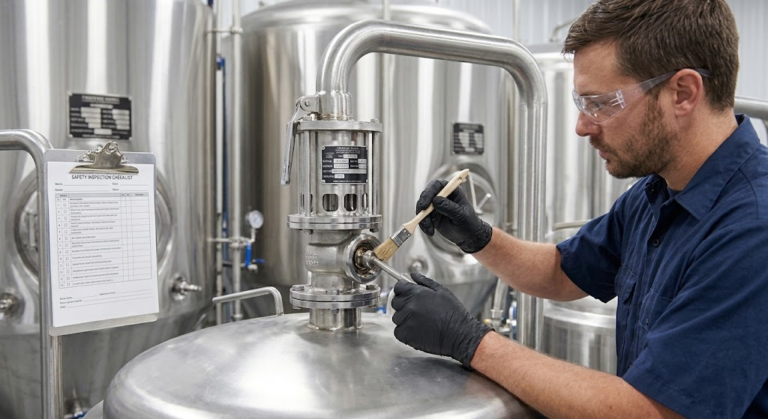
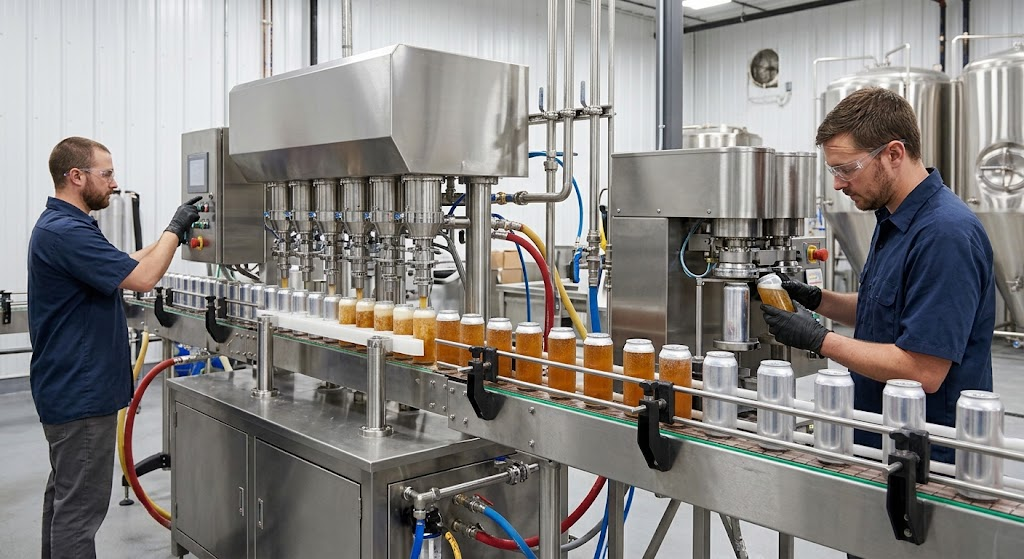
A can filler can meet its advertised speed yet create inconsistent fill, excessive foaming, or frequent stops in the brewery’s actual line. Acceptance should be based on a documented trial with the brewery’s beer, cans, utilities, operators, and downstream seamer. Define the test before installation so both buyer and supplier know what a satisfactory result looks like.
Prepare the site before arrival
Confirm floor space, drainage, power, gas, compressed air, product supply, and cleaning connections against the approved drawing. Verify service access around valves, sensors, and filler heads. A machine that fits its footprint may still be impossible to clean or maintain when placed beside a wall. Label utility connections and have the responsible trades sign off before commissioning.
Review the can sizes and beer styles intended for the filler. If size-change parts or recipes are required, include them in the trial. Use the actual seamer and conveyors when possible; isolated filler tests cannot reveal jams or accumulation issues at the handoff.
Test quality at realistic speed
Run enough cans to reach normal operating conditions. Record fill volume or weight variation, foam behavior, temperature, dissolved oxygen or package oxygen results where the quality plan requires them, and stoppages. Use the brewery’s approved measurement methods. Separate failures caused by upstream beer condition from those caused by filler settings. A single good can at low speed is not a production acceptance test.
Check what happens during start, stop, and restart. Beer may warm or foam in a stopped line, and the first cans after a restart may need to be segregated. Confirm that rejects are identified and do not rejoin saleable product without a defined review.
Hand over a usable machine
Verify cleaning cycles, maintenance access, spare parts, alarms, training, and documentation. Have operators run a changeover and a normal shutdown rather than watching only a supplier demonstration. Record open issues and who owns their resolution. For beer can filling equipment or a complete craft brewery canning line, the acceptance document should describe measured product quality and stable operation in the installed environment, not only the machine’s nominal cans-per-hour rating.
Write acceptance criteria that can be measured
The purchase agreement should identify target throughput under defined product and package conditions, acceptable fill variation, product-loss expectations, quality measurements, and who performs the tests. Avoid a vague promise of “up to” a speed that the installed line cannot sustain. Include the slowest and fastest planned beers if their foam behavior differs. Decide how long a stable run must last and how stops are counted. This makes a commissioning discussion evidence-based rather than a debate about a short demonstration.
Retain a few representative cans and the associated measurements. If a problem appears after the supplier leaves, those samples and settings provide a baseline.
Test cleaning and faults deliberately
Run the approved cleaning sequence and confirm that product-contact areas drain and can be inspected. Trigger safe, planned fault scenarios such as a missing can or low supply condition and observe alarms and reject behavior. Confirm that an operator can identify the cause and restart without bypassing an interlock. Record the parts and service contact needed for common failures. A machine that fills well only while a technician stands beside it is not fully handed over to the brewery.
Include the hardest beer in the trial
Choose at least one product that tends to foam or carries a different carbonation level from the easiest test beer. Confirm that the line can fill it at a useful speed without excessive rejects. Record beer temperature, tank condition, fill setting, and package results. If the machine performs well only with a specially prepared demonstration liquid, the trial does not establish production capability. Discuss with the supplier which product conditions are within the machine’s intended operating range before acceptance.
Use cans from the normal supplier and include the actual lid and seamer. A filler alone cannot prove package quality after closing. Verify the interface and reject path as a complete line.
Observe the operator handoff
Have brewery staff start the line, change a format or recipe, respond to a planned stop, perform cleaning, and shut it down while the supplier observes. Note steps that require undocumented knowledge. The handover should include clear parameter ranges, alarms, spare parts, maintenance intervals, and who to contact for service. A manual left in a box is not training; operators should be able to explain what they would do when fill variation or foam increases.
Record open commissioning issues with owners and dates. Do not sign off a line as fully accepted if a critical quality measurement or safety interlock remains unresolved.
Track early production
For the first production runs, trend fill variation, product loss, oxygen results where measured, stoppages, and cleaning issues. Compare them with the acceptance baseline under similar beer conditions. A drift after the supplier leaves may reveal an unstable utility, wear part, or operator setting. Keep enough detail to diagnose it instead of concluding that the machine is simply temperamental.
Define who signs off each part
Engineering can confirm utilities and guarding, packaging can confirm stable operation, and quality can confirm product and package results. Name the responsible approvers before the supplier arrives. A single signature saying “machine works” may hide an unresolved oxygen or fill issue. Keep a punch list of defects with evidence and a retest date. The supplier and brewery should agree which items prevent use and which can be closed after a monitored production run.
At final handover, store settings and software versions with the machine documentation. If a controller update changes behavior later, the accepted baseline will show what the line achieved at installation.
If package oxygen or fill quality varies during commissioning, test whether the variation follows filler head, beer supply condition, or line stop. Preserve the affected cans with timestamps and settings. A general statement that the filler needs adjustment gives the supplier little direction; a pattern by head or event can lead to a specific correction and a meaningful retest. Include a restart after a short planned stop in the acceptance run. Compare the first cans with those from steady operation so a transient filling defect is not missed.