The phrase “short fuse meaning” is commonly searched by people who want to understand what short fuse means in simple English. It usually describes someone who becomes angry, annoyed, or upset very quickly, especially over small problems. You may see this phrase in everyday conversations, text messages, social media posts, online discussions, and casual English. Although it can describe a person who gets angry easily, the exact tone can depend on the situation. In this guide, we will explain the meaning of short fuse, its slang and texting use, common examples, similar phrases, and how to use it correctly.
What Does Short Fuse Mean?
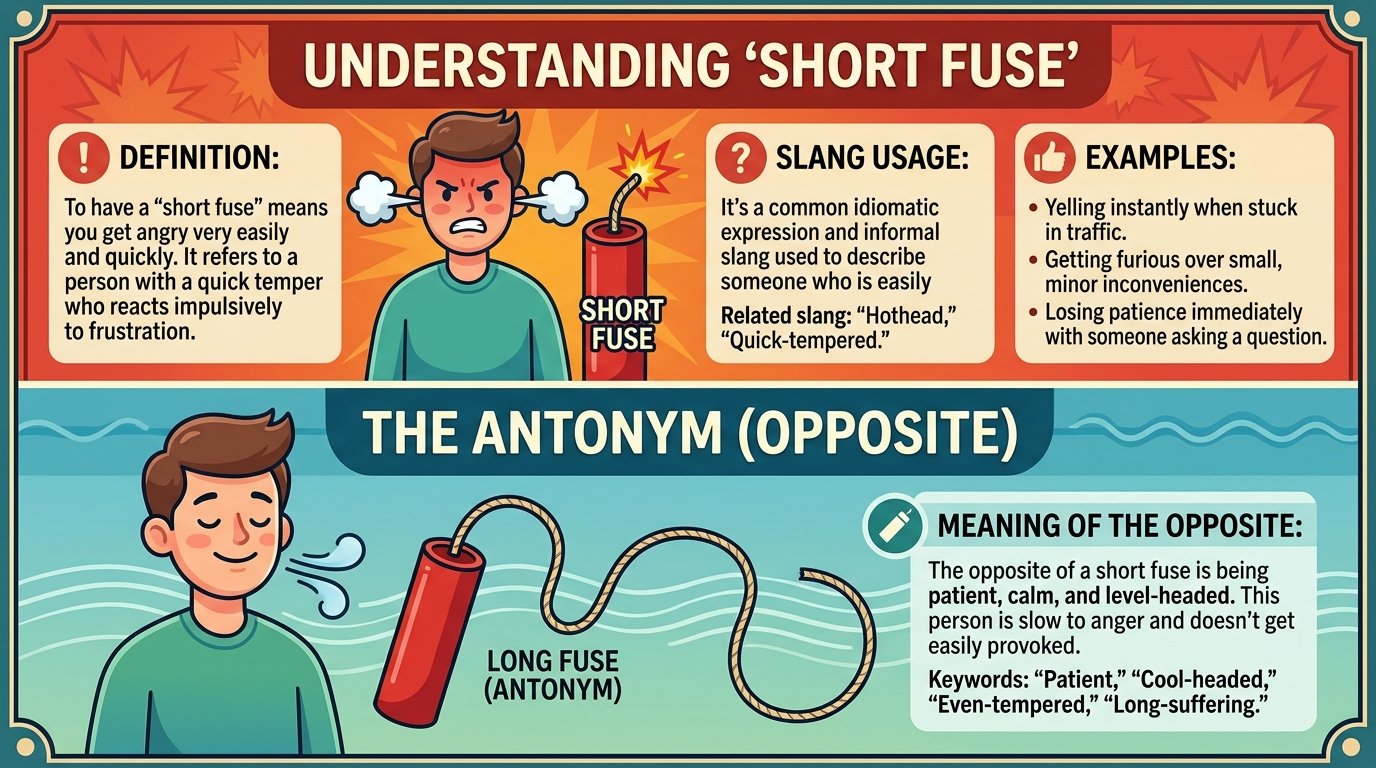
Short fuse is an English expression used to describe someone who gets angry or loses their temper very quickly. A person with a short fuse may become irritated over small problems or react strongly when something goes wrong.
For example, if someone gets angry immediately when a friend makes a small mistake, you might say, “He has a short fuse.” The phrase is usually used to describe a person’s temper or emotional reaction.
Simple Meaning of Short Fuse
- Gets angry very quickly
- Has a low tolerance for frustration
- Becomes annoyed over small things
- Can lose their temper easily
- Often describes a person with a quick temper
What Does Short Fuse Mean in Slang?
Short fuse meaning in slang is similar to its everyday English meaning. It describes someone who gets angry, annoyed, or frustrated very quickly.
For example:
“Don’t mess with him. He has a short fuse.”
Here, the speaker means that the person can become angry easily. Short fuse is an informal English expression, but it is not a texting abbreviation like “LOL” or “BRB.”
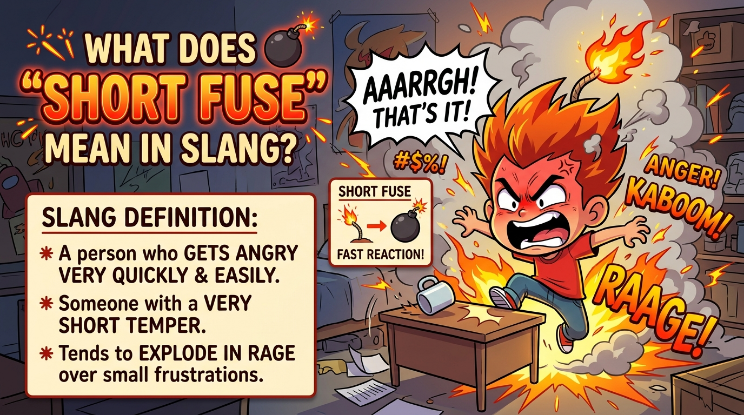
People may use it casually with friends, in social media comments, online chats, and other informal conversations. It can also be used humorously when talking about someone’s quick temper.
Common Meanings of Short Fuse in Texting
The short fuse meaning in texting is usually connected to someone’s temper. People may use this phrase when talking about a friend, family member, partner, coworker, or another person who becomes angry quickly.
In text messages, short fuse is usually not a special abbreviation or internet slang term. It is a common English expression that can be used casually. The meaning may be serious, humorous, or slightly critical depending on the conversation.
1. Short Fuse as a Quick Temper Expression
Someone may say that a person has a short fuse when they become angry very quickly.
For example:
“Don’t joke about that with him. He has a short fuse.”
This means the person may get angry easily.
2. Short Fuse as a Casual English Expression
In everyday English, people often use short fuse to describe someone who becomes frustrated or annoyed very quickly.
For example:
“My brother has a short fuse when he’s tired.”
Here, the phrase means that the brother becomes angry more easily when he is tired.
3. Short Fuse in Professional or Everyday Contexts
The phrase can also be used in workplaces or other formal situations, although it is more common in casual conversation.
For example:
“The manager has a short fuse when deadlines are missed.”
This means the manager may become angry quickly when work is late.
Why Short Fuse Can Be Confusing Online
The phrase short fuse can be confusing because it does not literally refer to a fuse. A fuse is normally something that burns before an explosion, but in this expression, it is used as a metaphor for someone’s temper.
The idea is that a person with a short fuse has very little time between becoming annoyed and becoming angry. Someone with a longer fuse may stay calm for longer before losing their temper.
This is why context matters when understanding short fuse meaning.
The Origin of Short Fuse
The expression short fuse comes from the literal idea of a fuse used with an explosive. A shorter fuse would burn more quickly and cause an explosion sooner.
Over time, this idea became a metaphor for a person’s temper. Someone with a “short fuse” was compared to an explosive with a short fuse because they could “go off” quickly.
Today, short fuse is a common English idiom used to describe someone who becomes angry or irritated very easily.
How Short Fuse Is Used on Social Media
On social media, people often use short fuse when describing someone’s quick temper or strong reaction.
The phrase can appear in comments, captions, posts, memes, and replies. Friends may also use it jokingly when someone becomes annoyed over something small.
For example:
“He has such a short fuse 😂.”
This may mean that the person gets angry quickly, but the speaker may be saying it in a playful way.
Common situations include:
- Getting angry over small problems
- Reacting strongly to criticism
- Losing patience quickly
- Becoming frustrated during arguments
- Getting annoyed when things go wrong
Short Fuse on TikTok and Instagram
On TikTok and Instagram, a short fuse may appear in captions, comments, or videos about relationships, friendships, arguments, and personality traits.
For example:
“When your friend has a short fuse 😂”
Another person might comment:
“That is literally me.”
In this situation, the phrase describes someone who gets irritated or angry very quickly.
The phrase can also be used humorously in videos about people who react strongly to minor problems.
Short Fuse in Text Messages
In text messages, short fuse usually describes someone’s quick temper.
For example:
Friend 1: “Why did Jake leave the group chat?”
Friend 2: “Someone criticized his idea.”
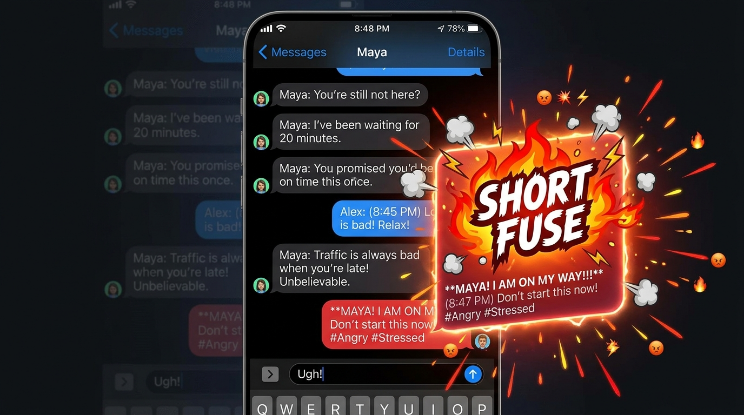
Here, the speaker means that Jake gets angry or upset quickly when someone disagrees with him.
The phrase can be serious or playful depending on the relationship between the people texting.
Short Fuse in Gaming Communities
Gaming communities can also use short fuse when talking about players who become angry quickly after losing, making mistakes, or facing difficult opponents.
For example:
“Don’t play ranked with him. He has a short fuse.”
This means the player may become angry quickly during competitive games.
Another example is:
“He has a short fuse whenever the team loses.”
The phrase is often used casually in gaming chats and discussions.
Real-World Examples of Short Fuse Usage
To understand the meaning of ” short fuse, ” it helps to see how the phrase works in different conversations.
Example 1: Casual Friend Conversation
Friend 1: “Why did Sam get angry?”
Friend 2: “Someone moved his chair.”
Here, short fuse means Sam becomes angry over a small problem.
Example 2: Online Comment
User 1: “He got angry because someone corrected his comment.”
User 2: “He definitely has a short fuse.”
The speaker means that the person becomes angry very quickly.
Example 3: Group Chat
Friend 1: “Don’t tease Mark about his new haircut.”
Friend 1: “He has a short fuse today.”
This means Mark may become annoyed or angry easily.
Example 4: Gaming Chat
Player 1: “Why did he quit after one loss?”
Player 2: “He’s got a short fuse.”
The phrase means the player gets frustrated quickly.
Example 5: Small Everyday Problem
Person 1: “She got angry because the coffee machine was slow.”
Person 2: “She has a really short fuse.”
Here, the phrase describes someone who reacts strongly to a minor inconvenience.
How to Respond When Someone Says You Have a Short Fuse
If someone says you have a short fuse, they usually mean that you become angry or frustrated quickly. Your response can depend on whether they are joking or seriously criticizing you.
You do not always need to take the phrase as an insult. Sometimes friends use it in a playful way.
Friendly Responses
You can respond casually with:
- “Maybe I get annoyed too quickly.”
- “Fair enough.”
- “I was just frustrated.”
- “I’m working on it.”
- “Okay, maybe I need to calm down.”
When You Are Unsure
If you are not sure why someone said you have a short fuse, you can ask:
“Why do you think I have a short fuse?”
This can help you understand whether they were joking or genuinely concerned about your reaction.
Why Context Matters More Than the Phrase
The meaning of short fuse becomes clearer when you look at the situation. A person may become angry because of a serious problem, but that does not necessarily mean they have a short fuse.
The phrase is usually used when someone seems to become angry very quickly or too easily.
Consider these factors:
- What happened before the person became angry?
- Was the problem serious or minor?
- Did the person react immediately?
- Does the person often lose their temper?
- Was the comment serious or joking?
These details help you understand whether short fuse is being used as a serious description or casual criticism.
Common Places Where You May See Short Fuse
The phrase short fuse can appear in many types of communication. It is not limited to texting or social media.
Text Messages
Friends may use it when talking about someone’s quick temper.
Social Media Comments
Users may describe someone as having a short fuse when they react strongly to criticism or jokes.
Gaming Chats
Players may use it for teammates who become angry quickly after losing.
Online Forums
People may use the phrase when discussing someone’s behavior during arguments or debates.
Private Messages
Friends and family members may use it when talking about someone’s personality or reactions.
Common Mistakes and Misconceptions About Short Fuse
The phrase short fuse is sometimes misunderstood because people may think it means being angry all the time. That is not necessarily the case.
Mistake 1: Assuming Short Fuse Means Angry All the Time
A person with a short fuse may not be angry constantly. The phrase usually means they become angry very quickly when something frustrates them.
Mistake 2: Using Short Fuse as a Simple Synonym for Angry
Short fuse describes a tendency to become angry quickly. It does not simply mean that someone is angry at one particular moment.
For example, “I’m angry” describes a current feeling, while “He has a short fuse” describes a person’s usual reaction.
Mistake 3: Expecting Everyone to Understand the Phrase
Short fuse is an idiom, so someone learning English may not understand its figurative meaning immediately.
It does not literally mean that someone has a small physical fuse.
Mistake 4: Using Short Fuse Without Considering Context
Not every angry reaction means someone has a short fuse. A person may have a valid reason for being upset.
The phrase is more appropriate when someone repeatedly becomes angry or frustrated very quickly.
Short Fuse vs Similar Words
Understanding similar expressions can make the meaning of short fuse easier to remember.
Short Fuse vs Hot-Headed
Hot-headed describes someone who becomes angry easily and may act without thinking.
Short fuse also describes a quick temper, but it focuses more on how quickly someone becomes angry.
For example:
- “He has a short fuse.” — He gets angry very quickly.
- “He’s hot-headed.” — He tends to react angrily and impulsively.
Short Fuse vs Irritable
Irritable means easily annoyed or bothered. A person does not necessarily have to become very angry.
Short fuse usually suggests a stronger and quicker emotional reaction.
A person can be irritable without having a short fuse.
Short Fuse vs Hot-Headed in Casual Conversations
The difference between short fuse and hot-headed can be useful in everyday conversations.
Someone with a short fuse may become angry over a small problem.
Someone who is hot-headed may not only become angry quickly but may also react strongly or impulsively.
For example:
“He has a short fuse when people are late.”
This focuses on how quickly he becomes annoyed.
But:
“He’s very hot-headed during arguments.”
This focuses more on his angry and impulsive behavior.
How to Know the Correct Meaning of Short Fuse
Understanding the meaning of ” short fuse ” becomes easier when you look at the situation around the phrase.
1. Where Did You See It?
Look at whether the phrase appeared in a text message, social media comment, gaming chat, or everyday conversation.
2. Who Used the Phrase?
Think about who said it. A friend may use short fuse jokingly, while a coworker or family member may use it as a serious observation.
3. What Is the Conversation About?
The topic can tell you whether the phrase is describing a person’s general temper or a single moment of frustration.
Frequently Asked Questions About Short Fuse
1. What does short fuse mean?
Short fuse means that someone becomes angry, annoyed, or frustrated very quickly.
2. What does short fuse mean in text?
In text messages, short fuse usually describes someone who gets angry or irritated easily, especially over small problems.
3. What does short fuse mean in slang?
In slang and casual English, short fuse describes someone who has a quick temper and can become angry very easily.
4. Is short fuse a slang term?
Short fuse is a common English idiom rather than a texting abbreviation. It is often used casually in conversations and online.
5. What does it mean when someone says you have a short fuse?
It means they think you become angry or frustrated quickly and may lose your temper easily.
6. Is having a short fuse a bad thing?
It is usually a mildly negative description because it suggests that someone has difficulty staying calm. However, the phrase can sometimes be used jokingly.
7. How should I respond if someone says I have a short fuse?
You can respond calmly with something like, “Maybe I was just frustrated,” or “Fair enough, I’ll try to stay calmer.”
Conclusion
Understanding the meaning of ” short fuse ” is easier when you remember that it describes a person who gets angry, annoyed, or frustrated very quickly. It is a common English idiom and is often used in everyday conversations, text messages, social media, and gaming chats.
The phrase does not mean that someone is angry all the time. Instead, it focuses on how quickly they lose patience or become upset. Similar expressions such as hot-headed and irritable can have related meanings, but they are not exactly the same.
If you see short fuse in a text, comment, or conversation, look at the context to understand whether it is being used seriously, casually, or as a joke.